
GoHighLevel Automation Workflows:
Build Scalable Systems That Convert on Autopilot
🚀 Introduction
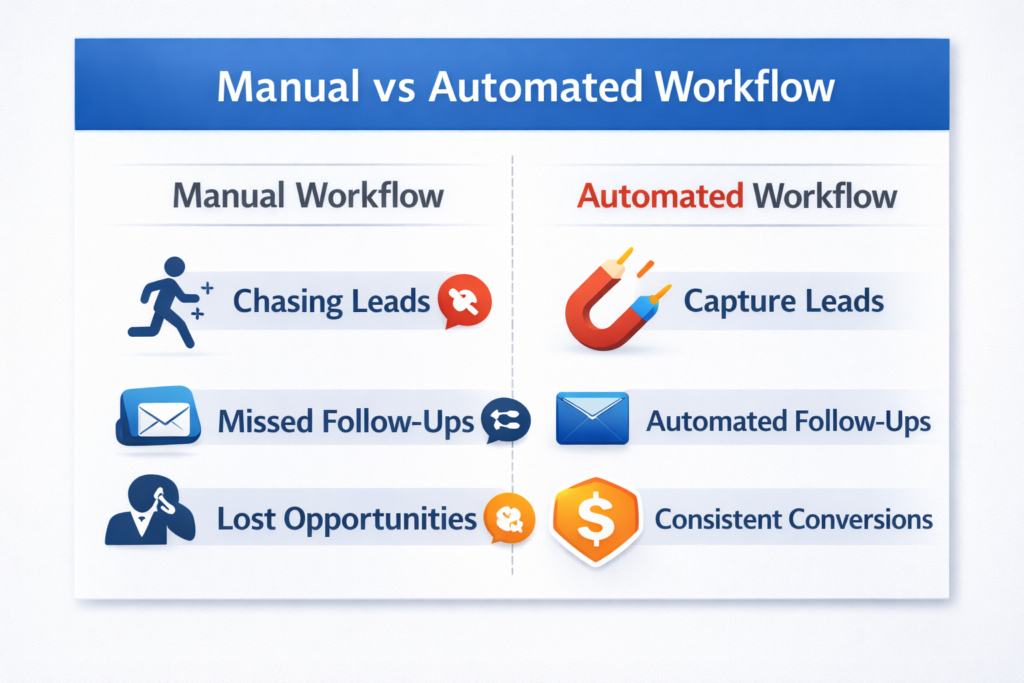
Most businesses don’t have a lead problem — they have a system problem.
Leads come in… but:
- Follow-ups are inconsistent
- Appointments get missed
- Opportunities fall through the cracks
That’s where automation workflows — powered by GoHighLevel — completely change the game.
Instead of chasing leads manually, you build a system that:
✔ Captures
✔ Nurtures
✔ Converts
✔ Retains
…automatically.
🧠 What is a GoHighLevel Automation Workflow (Really)?
At a basic level, it’s a sequence of triggers and actions.
But at a premium level, it’s:
A revenue engine that guides every lead through a predictable journey — without human intervention.
Think of it like this:
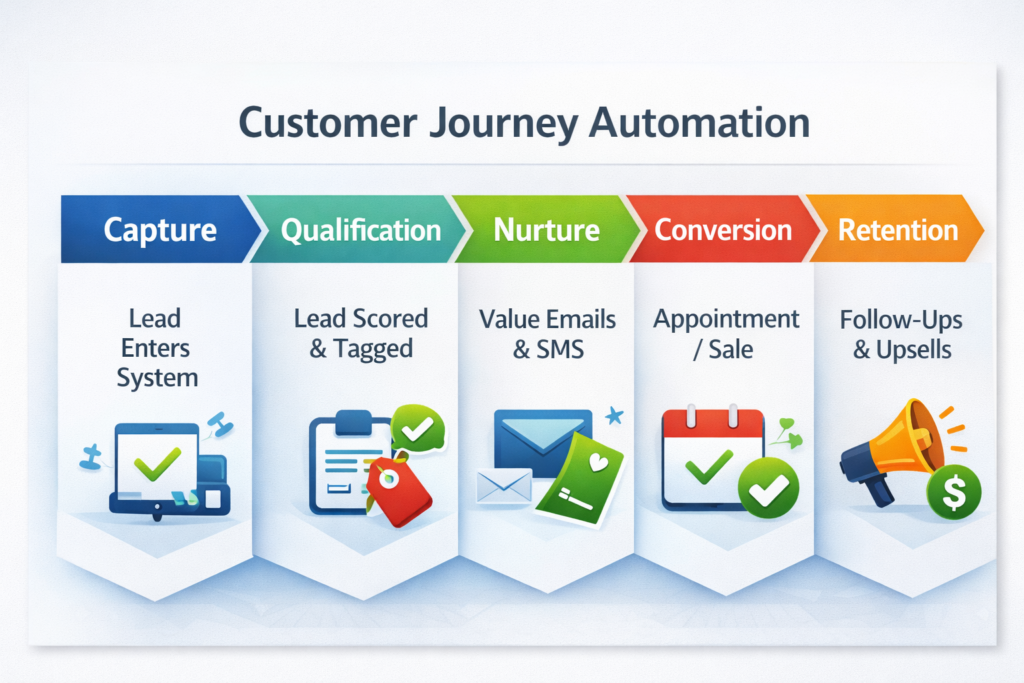
| Stage | What Happens |
|---|---|
| Capture | Lead enters system |
| Qualification | Lead is scored/tagged |
| Nurture | Value-driven communication |
| Conversion | Booking / Sale |
| Retention | Follow-ups & upsells |
⚙️ Why High-Level Automation is a Competitive Advantage
Businesses using advanced automation don’t just save time — they dominate their market.
🔥 1. Speed-to-Lead Wins Deals
Studies show: The faster you respond, the higher your conversion rate.
With GoHighLevel:
Instant SMS reply ⚡Immediate email follow-up 📧
Automated booking link
No delays. No missed opportunities.
🔥 2. Consistency at Scale
Humans forget. Systems don’t.
Automation ensures:
- Every lead gets the same experience
- Every follow-up is delivered
- Every opportunity is maximized
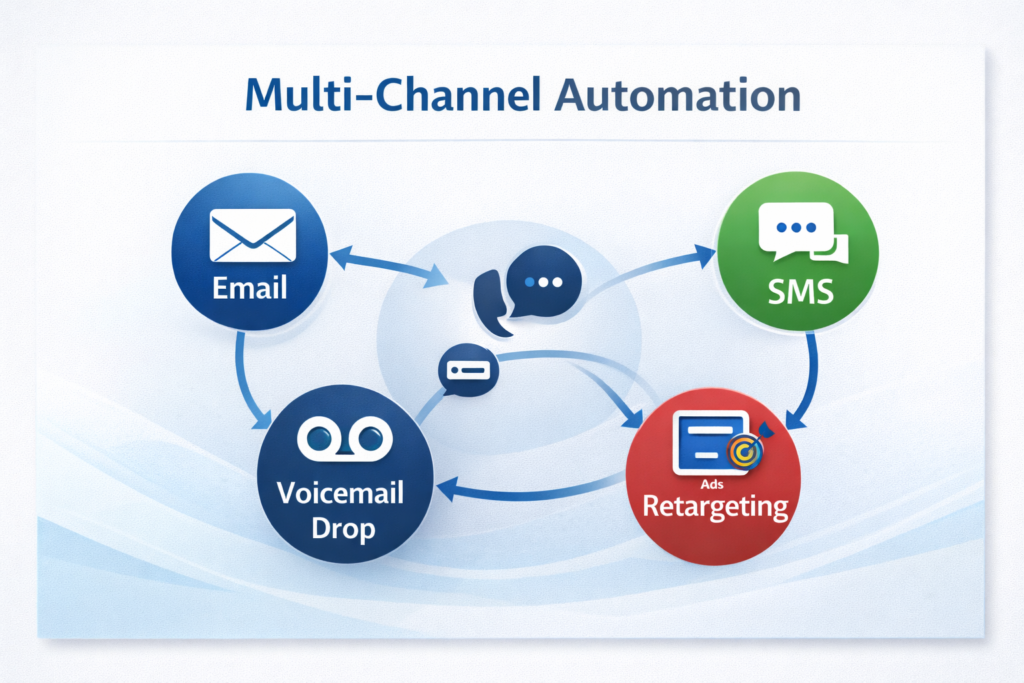
🔥 3. Multi-Touchpoint Domination
Modern buyers need multiple interactions before converting.
Automation lets you combine:
- Email sequences
- SMS reminders
- Voicemail drops
- Retargeting triggers
🏗️ Core Architecture of a High-Converting Workflow
This is where most people go wrong — they build random automations instead of structured systems.
Here’s the correct architecture:
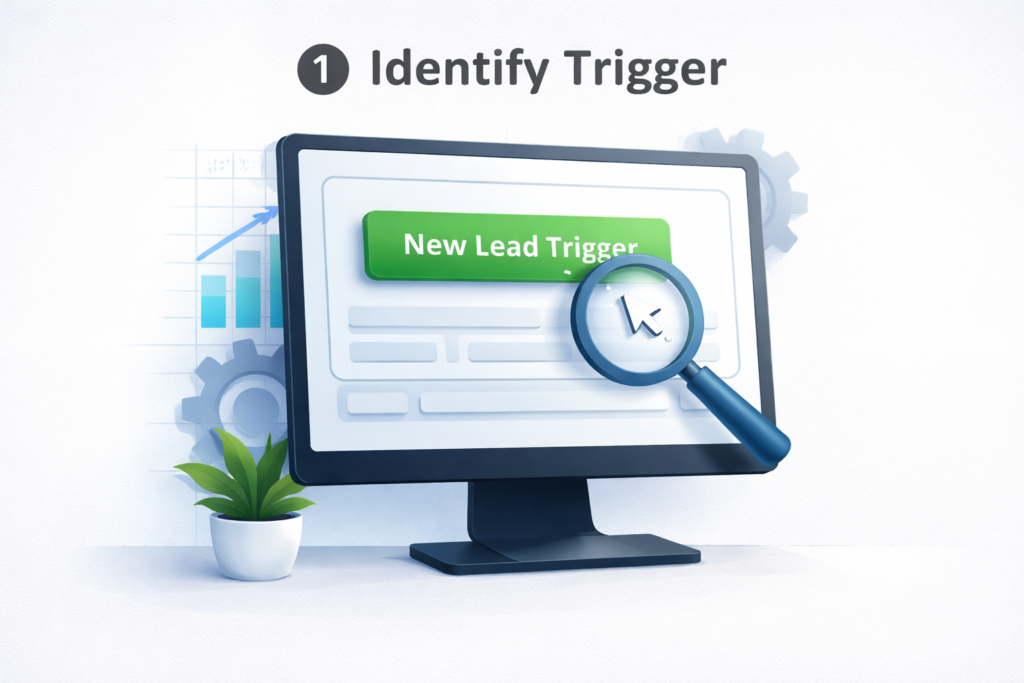
🔹 1. Smart Triggers (Entry Points)
Examples:
- Form submission
- Facebook lead ad
- Website chat
- Missed call
💡 Pro Insight:
Use different triggers for different traffic sources to track performance accurately.
🔹 2. Intelligent Segmentation
Not all leads are equal.
Segment based on:
- Budget
- Timeline
- Interest level
- Service type
🔹 3. Multi-Step Nurture Sequences
Instead of “buy now” messaging, use:
- Value email
- Social proof
- Case study
- Offer
This builds trust → increases conversions.
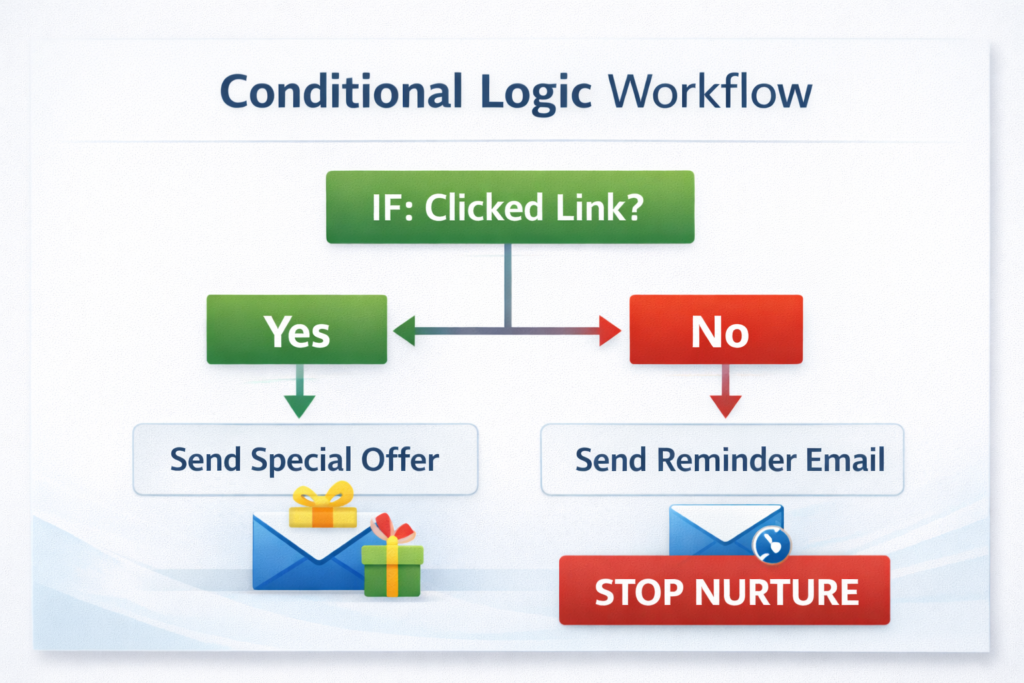
🔹 4. Conditional Logic (If/Else)
This is where automation becomes smart:
- If user clicks → send offer
- If no response → send reminder
- If booked → stop nurture
🎯 Use Case: Appointment Booking Funnel
Step 1: Lead Capture
- Trigger: Form submission
- Action: Tag + pipeline entry
Step 2: Instant Engagement
- SMS: “Hey {{name}}, got your request…”
- Email: Confirmation + booking link
Step 3: Follow-Up Sequence
- Day 1: Reminder SMS
- Day 2: Value email
- Day 3: Scarcity message
Step 4: Appointment Confirmation
- Confirmation email
- Calendar sync
- Pre-call instructions
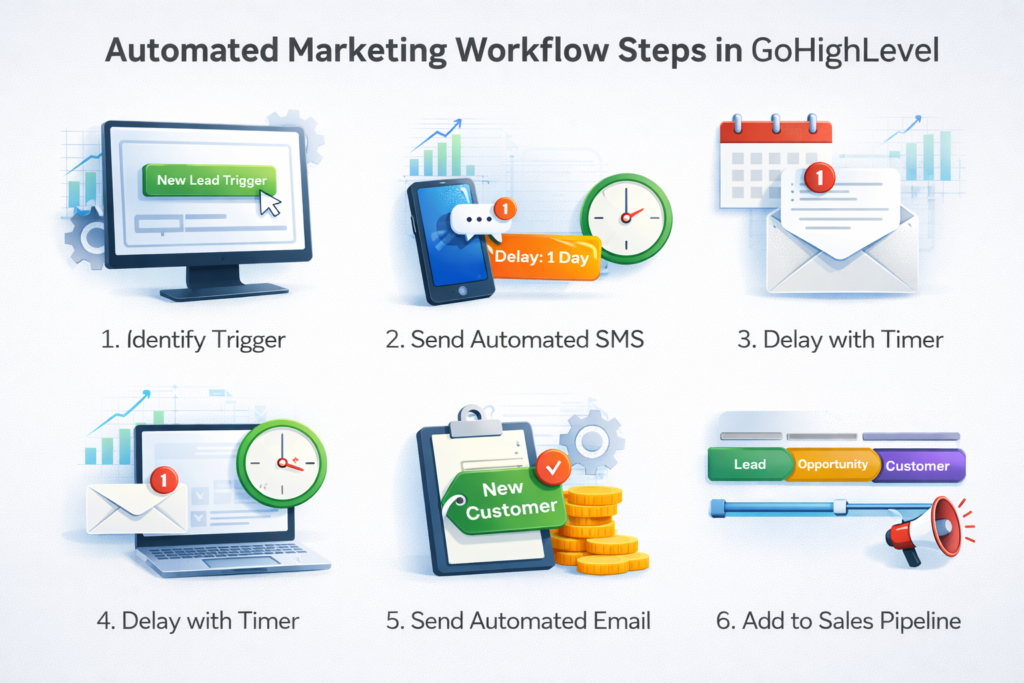
Step 5: Reminder System
- 48 hours before
- 24 hours before
- 1 hour before
Step 6: No-Show Recovery
If no show:
- SMS: “Missed you today…”
- Rebooking link
- Follow-up email sequence
🔥 Lead Scoring System
Assign points based on actions:
- Open email = +5
- Click link = +10
- Book call = +50
Focus only on hot leads 🔥
🔥 Pipeline Automation
Move leads automatically:
- New Lead → Contacted → Booked → Closed
🔥 Behavior-Based Automation
Trigger actions based on behavior:
- Page visits
- Link clicks
- Replies